From comparing story characters to analyzing scientific habitats, contrasting two related concepts is one of the most frequent cognitive tasks we ask students to perform. Yet, when handed a blank sheet of lined paper, students often struggle to structure their comparison systematically.
To help students organize similarities and differences without getting lost in paragraphs of text, we turn to one of the most reliable and universally recognized visual tools: the Venn Diagram.
What is a Venn Diagram?
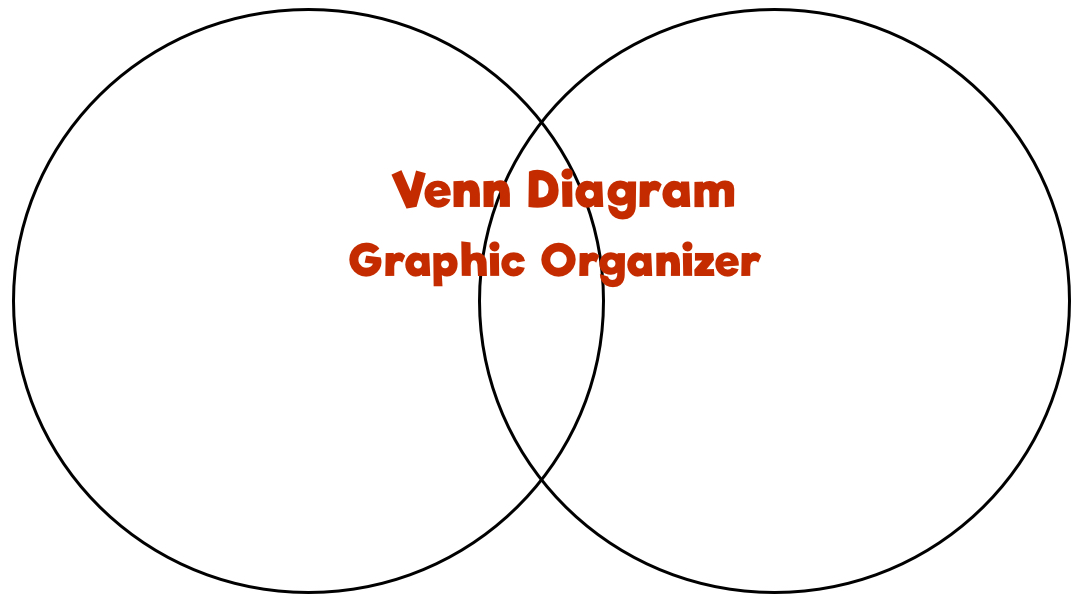
Invented by logician John Venn in the late 19th century, a Venn diagram is a graphic organizer made of overlapping shapes—typically two or three large circles.
This simple mathematical model translates perfectly into a classroom literacy and analytical tool:
The Outer Sections: Hold the unique, contrasting characteristics that belong only to one specific subject.
The Overlapping Center: Holds the shared, common traits where the two subjects intersect.
This layout forces students to move beyond surface-level list-making. Because space in the overlapping center is naturally limited, it encourages students to be precise and selective with their comparative thinking.
When and How to Use a Venn Diagram
The strength of a Venn diagram lies in its direct simplicity. It can be used across subjects to make abstract comparisons concrete:
1. Literary Character & Setting Comparisons
Have students compare two characters in a novel (e.g., their motives, actions, or personality traits) or analyze how a setting changes from the beginning of a story to the end. It is also a powerful way to compare a book to its film adaptation.
2. Informational Text & Social Studies Analysis
When teaching history or geography, use Venn diagrams to compare different cultures, historical figures, or government systems.
Example: Comparing the daily lives of citizens in Ancient Athens versus Ancient Sparta.
3. Scientific Classification
In science, students can visually classify physical properties, animal groups, or ecosystems.
Example: Comparing the life cycles and traits of amphibians versus reptiles, or identifying what plant cells and animal cells have in common.
Finding the Right Fit: Grade Level Recommendations
The Venn diagram is highly adaptable, but the way students interact with it changes as their cognitive skills grow:
Early Childhood (K-1) Physical & Highly Visual: Introduce the concept using large hula hoops laid on the floor. Give students physical objects or picture cards to sort into the hoops. For example, sort toy animals into "Lives in Water" (blue hoop), "Lives on Land" (green hoop), or "Both" (the overlapping middle).
Lower Elementary (2-3) Interactive Printables: Transition to paper templates using structured support. Provide a pre-written "word bank" of facts or phrases. Students read the facts, decide where they belong, and write them in the correct sections of the diagram.
Upper Elementary (4-5) Independent Text Analysis: Students draw directly from their reading to complete a blank template. At this stage, challenge them to use the completed diagram as a direct outline to write a cohesive, multi-paragraph compare-and-contrast essay.
Why It Works: The Cognitive Science
The Venn diagram is a powerful tool because it promotes high-order categorizing.
According to educational research on instructional strategies, comparing and contrasting is one of the most effective ways to improve student achievement. It forces the brain to active-recall information, analyze features, and find patterns. By visually separating unique traits from shared elements, the diagram helps students organize complex ideas, which dramatically improves comprehension and long-term memory retrieval.
Grab Your Free Venn Diagram Template!
To help your students master the art of comparison, we’ve designed a free, minimalist Printable Venn Diagram Graphic Organizer.
Keeping with our design values at Lesson Plan Source, this template features generous writing circles, clean typography, and a distraction-free layout. It is formatted to maximize writing space—ensuring your students have plenty of room to write their thoughts clearly, even in that tricky middle section.