Art Project Overview:
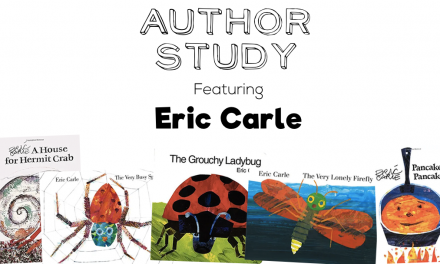
This hands-on art project is designed as a follow-up activity to Eric Carle’s classic story, A House for Hermit Crab. After reading and discussing the book, this extension plan allows students to dive deeper into the story's themes through tactile exploration.
By utilizing various materials, this project provides a meaningful opportunity for sensory exploration while replicating the iconic, textured illustration style of the book. Beyond the art connection, the materials can easily be integrated into small-group math centers for hands-on sorting and counting. Once completed, these vibrant hermit crabs can be displayed on a collaborative classroom underwater mural, an aquarium bulletin board, or a dramatic play pet shop.
This standalone activity is a wonderful way to celebrate the story, and it serves as a perfect companion piece to our comprehensive Eric Carle Author Study available in the shop.
Recommended Grade Level(s):
Pre-kindergarten, Kindergarten, First
Objective(s):
Students will be assessed according to their ability to:
- Complete the House for Hermit Crab project.
- State what the hermit crab uses its shell for.
Materials:
- Hermit Crab Worksheet (best to print on heavy paper)
- crayons, markers, or paints (+ brushes, smocks)
- liquid glue (+ brush and small cups to hold glue)
- scissors
- white paper bowl (one per child)
- shoebox (2-3)
- craft glue
- googly eyes (2 per child)
- sand*
- seashells* (2-5 shells per hermit crab)
- shoebox or tray
- any other materials you want to include (shiny jewels, tinsel, crepe or tissue paper, etc.)
*The sand and seashells can be put into a sensory table ahead of time for students to explore. Provide labeled cups to encourage the sorting and counting of the shells. Printable word cards from the story can also be laminated and placed in the sensory table for students to find matches.
How to Implement:
- Color or paint the Hermit Crab worksheet.
- Once dry, cut out (optional).
- Glue on wiggly eyes.
- Brush glue onto the outside of the paper bowl.
- Place the bowl inside the shoebox or tray (used to catch the sand and avoid a huge mess).
- Sprinkle sand to cover the outside of the bowl and press to ensure adhesion.
- Lift the bowl to gently shake off any excess sand.
- Glue seashells to the outside of the bowl.
- Once the bowl is completely dry, glue the bowl to the Hermit Crab.
Assessment:
While students work, informally assess for FFS: fine motor abilities, following directions, and safety.
Did they hold the scissors correctly? Did they follow the sequence/execute the steps correctly? Did they use the scissors and supplies safely and appropriately?
As students work, ask them to recall the story and make connections with their art piece. Ask them why the hermit crab needs a shell. Once the hermit crabs are complete, share them as a whole group and encourage students to talk about their creations — why they chose certain colors, what name they may have given their crab, and how long they think their crab will keep its shell.
National Visual Arts Standards (NCAS) Addressed:
VA:Cr2.2.Ka & 1a: Demonstrate safe and proper procedures for using art tools and materials.
VA:Cr2.1.Ka & 1a: Experiment with and choose various materials and tools to create works of art or design.
Common Core Reading & Literacy Standards (CCSS) Addressed:
CCSS.ELA-LITERACY.RL.K.3 / RL.1.3: With prompting and support, describe the connection between two individuals, events, ideas, or pieces of information in a text.
CCSS.ELA-LITERACY.RL.K.7 / RL.1.7: Describe the relationship between illustrations and the story in which they appear.
CCSS.ELA-LITERACY.SL.K.5 / SL.1.5: Add drawings or other visual displays to descriptions to provide additional detail.