When we think about early childhood education, we often focus on letters, sounds, and counting. But one powerful learning tool is often sitting in our pockets: the penny.
Introducing young learners to coins—especially the penny—lays an important foundation not only for math skills, but for lifelong financial literacy. If you teach Pre-K through 2nd grade, penny instruction isn’t “extra.” It’s essential. Here's why...
When Should Children Learn About the Penny?
Children can begin recognizing coins as early as age 4. At this stage, learning is hands-on and visual:
- Identifying the penny by its copper color
- Noticing it is smaller than some coins
- Calling it by name
- Counting small groups of pennies
By Kindergarten (ages 5–6), students are developmentally ready to understand that:
- A penny is worth one cent
- 1¢, $0.01, and “one cent” represent the same value
- Pennies can be counted and grouped
In 1st and 2nd grade, students deepen understanding by:
- Comparing pennies to other coins
- Solving simple money word problems
- Graphing and organizing coin data
- Counting mixed coins
The progression is natural—and it mirrors how children develop number sense.
Research-Backed Reasons Early Money Instruction Matters
1. Early Math Skills Predict Later Academic Success
Research from the National Institute for Early Education Research (NIEER) shows that early math skills are one of the strongest predictors of later academic achievement—even more than early reading skills.
When students count pennies, match values, and graph coin images, they’re developing:
- One-to-one correspondence
- Number sense
- Categorization
- Data representation
- Algebraic thinking (patterns)
These are foundational math competencies that support long-term success.
2. Financial Habits Begin Forming in Early Childhood
Research from the University of Cambridge suggests that children’s money habits begin forming as early as age 7. That means early exposure matters.
When young learners:
- Recognize coin values
- Connect money symbols to quantities
- Practice counting and exchanging coins
They begin building the cognitive framework needed for future financial decision-making.
Even simple penny activities introduce the idea that money has value and purpose.
3. Multi-Sensory Learning Strengthens Retention
Young children learn best through hands-on, interactive experiences. According to research in early childhood cognitive development, tactile and visual engagement increases retention and conceptual understanding.
When students:
- Trace “1¢” and “one cent”
- Color and cut coin models
- Graph coin types
- Match coins to labeled amounts
They aren’t just memorizing—they’re constructing understanding.
4. Money Instruction Supports Multiple Domains at Once
Teaching the penny isn’t just about coins. It integrates:
- Math (counting, graphing, patterns, comparing values)
- Literacy (reading money words, tracing vocabulary)
- Fine Motor Development (cutting, tracing, coloring)
- Visual Discrimination (heads vs. tails, Union Shield vs. Lincoln Memorial)
- Critical Thinking (matching, sorting, problem solving)
Few early elementary topics are this cross-curricular.
Why Start with the Penny?
The penny is developmentally appropriate because:
- It represents one unit, making it concrete and easy to count.
- It introduces symbolic representation (1¢ and $0.01).
- It allows children to physically model amounts without overwhelming them.
It’s the perfect starting point for money instruction.
Making Penny Instruction Engaging
Worksheets are most effective when they are interactive and developmentally aligned. Activities like:
- Tracing money words and symbols
- Drawing matching coin amounts
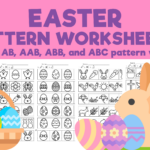
- Completing AB, ABB, and ABC patterns
- Counting and graphing penny images
- Matching items to penny values
- Creating a 3D penny craft model
…transform money instruction from abstract to meaningful.
Ready to Teach the Penny with Confidence?
If you’re looking for structured, hands-on penny activities designed for Pre-K through 2nd-grade learners, I’ve created a comprehensive set of Penny Worksheets in my LPS store.
These resources include:
- Read, Trace, and Draw activities
- Graphing practice
- Matching and counting worksheets
- Pattern extension activities
- A collaborative penny information sheet
- A trace-and-build 3D penny craft
They are designed to support early math foundations while building confidence and financial awareness.
Early money instruction isn’t just about coins. It’s about building thinkers, problem-solvers, and future decision-makers—starting with one simple cent.