One of the best ways to communicate with parents—even in this technological age—is by sending home a classroom newsletter. A newsletter provides a consistent, organized way to share important information about classroom activities, learning goals, and upcoming events. It helps parents feel connected to their child’s education and allows them to support learning at home.
Start the Year Strong
The key to an effective parent newsletter is consistency. Begin sending your newsletter at the very start of the school year. Whether you choose to send it weekly, biweekly, or monthly, sticking to a regular schedule helps parents know when to expect it. Parents become “trained” to look for it on a specific day, and many will notice if it doesn’t arrive as expected. Jumping from Wednesday one week to Monday the next may create confusion and even make parents question your organizational skills.
Using a template that can be modified each week is the most practical approach. A weekly newsletter may require a bit more effort, but it provides peace of mind that important information and reminders are sent home consistently. It also allows parents to be accountable for reading it, helping ensure that everyone is on the same page.
Tailoring Newsletters by Grade Level
Different grade levels benefit from different newsletter styles and content.
Primary Grades (K–2)
- Use simple language and clear visuals.
- Keep paragraphs short and easy to scan.
- Include conversation starters or discussion questions for parents.
- Highlight basic skills like phonics, early math strategies, and social-emotional development.
- Share reminders about routines (folders, reading logs, and homework).
Intermediate Grades (3–5)
- Provide more detailed curriculum updates and project overviews.
- Include rubrics, test dates, and study tips.
- Suggest ways parents can help their child practice skills at home.
- Highlight enrichment opportunities or optional learning activities.
Middle School
- Offer subject-specific updates and timelines for assignments.
- Include organizational and study tips to support executive functioning.
- Emphasize student accountability and growth.
- Share guidance about digital platforms, grading policies, and how parents can monitor progress.
Key Sections to Include
While every classroom newsletter will reflect a teacher’s style, these sections are particularly helpful:
- Message from the Teacher – Personal notes or reflections to build a connection.
- Weekly/Monthly Learning Highlights – An overview of lessons in reading, writing, math, science, and social studies.
- Specials/Electives Schedule – Include music, art, PE, or other rotations so families can plan ahead.
- Reminders and Important Dates – Field trips, tests, homework deadlines, or school events.
- Skill Spotlight – Highlight one or two skills parents can reinforce at home.
- Student Recognition – Feature a “Student of the Week” or classroom accomplishments.
- Technology Corner – Share digital tools, websites, or online resources students are using.
- How Families Can Help – Quick, actionable suggestions for supporting learning at home.
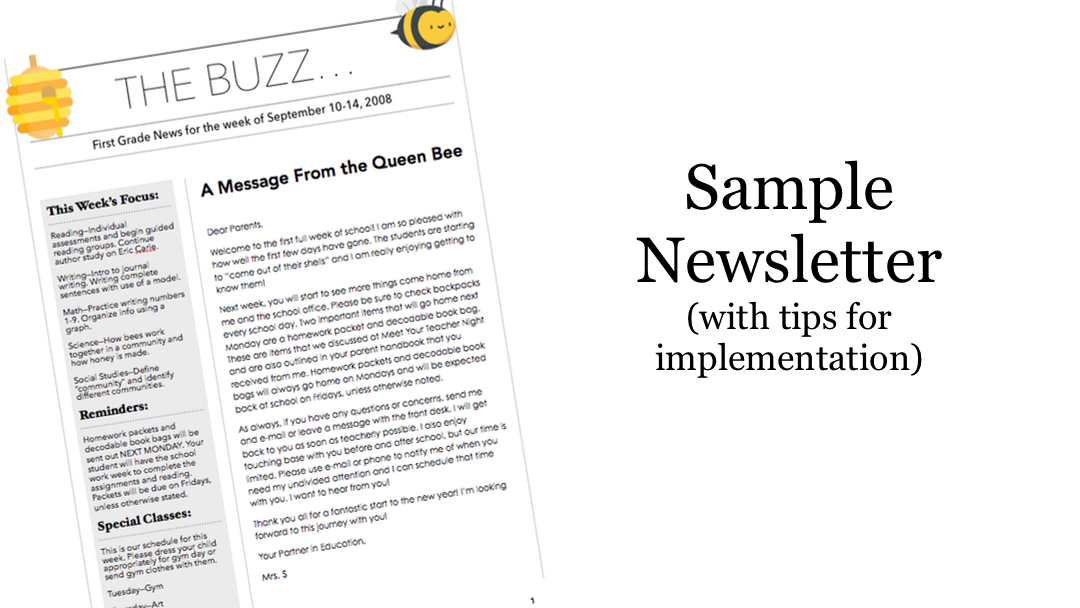
A simple column layout works well. For example, the main column can feature a teacher message, while a side column includes learning highlights, schedule reminders, or upcoming events. On a second page, a similar layout can feature a “Technology Corner” and highlight the student of the week.
How Often Should You Send It?
- Weekly – Ideal for younger students and fast-paced classrooms. Keeps parents consistently informed.
- Biweekly – A manageable rhythm that still maintains strong communication.
- Monthly – Works well for older students or longer-term projects.
Consistency is more important than frequency. Pick a schedule you can realistically maintain and stick with it throughout the year.
Benefits That Last All Year
A classroom newsletter:
- Strengthens home–school communication
- Reduces confusion and missed deadlines
- Builds trust and transparency
- Encourages meaningful conversations between students and parents
Even a simple, well-organized newsletter can have a big impact.
If you’re looking for a practical example, I’ve created a free sample newsletter for first graders titled “The Buzz”. It demonstrates how a clear, two-page layout with main and side columns can effectively communicate classroom news while engaging families.